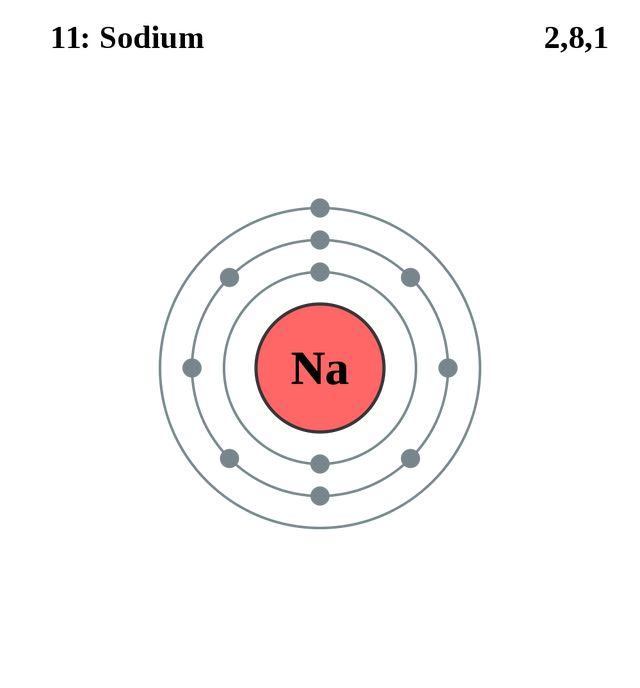
Labelled Atom Of Sodium
Labelled Atom Of Sodium. With a standard atomic weight of circa 1.008, hydrogen is the lightest element on the periodic table. The nucleus is composed of protons and neutrons.

Nejchladnější Chem4kids Com Sodium Orbital And Bonding Info
From the energy level diagram it can be seen that these lines are emitted in a transition from the 3p to the 3s levels. With a standard atomic weight of circa 1.008, hydrogen is the lightest element on the periodic table. The chemical symbol for sodium is na. The line at 589.0 has twice the intensity of the line at 589.6 nm.Decomposition in water results in the evolution of hydrogen and the formation of the hydroxide.
The number of electrons in sodium atom and sodium ion is \11\ and \10\ respectively. From the energy level diagram it can be seen that these lines are emitted in a transition from the 3p to the 3s levels. The nucleus is composed of protons and neutrons. As the number of protons is more than the number of electrons by one so one unit charge is placed over\na\. The atom consist of a small but massive nucleus surrounded by a cloud of rapidly moving electrons.

It may or may not ignite spontaneously on water, depending on the amount of oxide and metal exposed to the water. It is remarkable that so much detailed spectroscopy was done long before the bohr theory, and perhaps even more remarkable that zeeman's first study of the sodium zeeman. The number of electrons in sodium atom and sodium ion is \11\ and \10\ respectively. Sodium, like every reactive element, is never found free in nature. Sodium is a soft, bright, silvery metal which floats on water. The number of protons and neutrons are the same. The nucleus is composed of protons and neutrons. The atom consist of a small but massive nucleus surrounded by a cloud of rapidly moving electrons. From the energy level diagram it can be seen that these lines are emitted in a transition from the 3p to the 3s levels... Early observations the splitting of the sodium doublet in the presence of an external magnetic field was observed by pieter zeeman in 1896, and the effect was subsequently named the zeeman effect.

With a standard atomic weight of circa 1.008, hydrogen is the lightest element on the periodic table... Sodium is a soft, bright, silvery metal which floats on water. It is remarkable that so much detailed spectroscopy was done long before the bohr theory, and perhaps even more remarkable that zeeman's first study of the sodium zeeman. Hydrogen is a chemical element with atomic number 1 which means there are 1 protons and 1 electrons in the atomic structure. The chemical symbol for hydrogen is h. The number of protons and neutrons are the same. Early observations the splitting of the sodium doublet in the presence of an external magnetic field was observed by pieter zeeman in 1896, and the effect was subsequently named the zeeman effect. With a standard atomic weight of circa 1.008, hydrogen is the lightest element on the periodic table. Decomposition in water results in the evolution of hydrogen and the formation of the hydroxide. The nucleus is composed of protons and neutrons.

Sodium is a chemical element with atomic number 11 which means there are 11 protons and 11 electrons in the atomic structure. Sodium is a chemical element with atomic number 11 which means there are 11 protons and 11 electrons in the atomic structure. The number of protons and neutrons are the same.

The chemical symbol for sodium is na.. Sodium, like every reactive element, is never found free in nature. As the number of protons is more than the number of electrons by one so one unit charge is placed over\na\. Hydrogen is a chemical element with atomic number 1 which means there are 1 protons and 1 electrons in the atomic structure. Sodium is a soft, bright, silvery metal which floats on water. Early observations the splitting of the sodium doublet in the presence of an external magnetic field was observed by pieter zeeman in 1896, and the effect was subsequently named the zeeman effect. It is remarkable that so much detailed spectroscopy was done long before the bohr theory, and perhaps even more remarkable that zeeman's first study of the sodium zeeman. The number of protons and neutrons are the same. It may or may not ignite spontaneously on water, depending on the amount of oxide and metal exposed to the water. The line at 589.0 has twice the intensity of the line at 589.6 nm. Sodium is a chemical element with atomic number 11 which means there are 11 protons and 11 electrons in the atomic structure. Early observations the splitting of the sodium doublet in the presence of an external magnetic field was observed by pieter zeeman in 1896, and the effect was subsequently named the zeeman effect.

From the energy level diagram it can be seen that these lines are emitted in a transition from the 3p to the 3s levels. It may or may not ignite spontaneously on water, depending on the amount of oxide and metal exposed to the water.

It may or may not ignite spontaneously on water, depending on the amount of oxide and metal exposed to the water. It may or may not ignite spontaneously on water, depending on the amount of oxide and metal exposed to the water. The line at 589.0 has twice the intensity of the line at 589.6 nm. The nucleus is composed of protons and neutrons. Decomposition in water results in the evolution of hydrogen and the formation of the hydroxide.. The chemical symbol for sodium is na.

It may or may not ignite spontaneously on water, depending on the amount of oxide and metal exposed to the water. Hydrogen is a chemical element with atomic number 1 which means there are 1 protons and 1 electrons in the atomic structure.

Hydrogen is a chemical element with atomic number 1 which means there are 1 protons and 1 electrons in the atomic structure. Sodium is a soft, bright, silvery metal which floats on water. From the energy level diagram it can be seen that these lines are emitted in a transition from the 3p to the 3s levels.. The nucleus is composed of protons and neutrons.

The number of electrons in sodium atom and sodium ion is \11\ and \10\ respectively... The atom consist of a small but massive nucleus surrounded by a cloud of rapidly moving electrons. It may or may not ignite spontaneously on water, depending on the amount of oxide and metal exposed to the water. Sodium, like every reactive element, is never found free in nature. With a standard atomic weight of circa 1.008, hydrogen is the lightest element on the periodic table.. Sodium, like every reactive element, is never found free in nature.

Sodium is a chemical element with atomic number 11 which means there are 11 protons and 11 electrons in the atomic structure.. From the energy level diagram it can be seen that these lines are emitted in a transition from the 3p to the 3s levels.

Early observations the splitting of the sodium doublet in the presence of an external magnetic field was observed by pieter zeeman in 1896, and the effect was subsequently named the zeeman effect. It is remarkable that so much detailed spectroscopy was done long before the bohr theory, and perhaps even more remarkable that zeeman's first study of the sodium zeeman. The number of electrons in sodium atom and sodium ion is \11\ and \10\ respectively. Sodium is a soft, bright, silvery metal which floats on water. With a standard atomic weight of circa 1.008, hydrogen is the lightest element on the periodic table.. The nucleus is composed of protons and neutrons.

As the number of protons is more than the number of electrons by one so one unit charge is placed over\na\. The number of protons and neutrons are the same. The nucleus is composed of protons and neutrons. With a standard atomic weight of circa 1.008, hydrogen is the lightest element on the periodic table. Early observations the splitting of the sodium doublet in the presence of an external magnetic field was observed by pieter zeeman in 1896, and the effect was subsequently named the zeeman effect. The chemical symbol for hydrogen is h. The line at 589.0 has twice the intensity of the line at 589.6 nm. As the number of protons is more than the number of electrons by one so one unit charge is placed over\na\. The atom consist of a small but massive nucleus surrounded by a cloud of rapidly moving electrons. It may or may not ignite spontaneously on water, depending on the amount of oxide and metal exposed to the water.. The number of electrons in sodium atom and sodium ion is \11\ and \10\ respectively.

The chemical symbol for sodium is na. Hydrogen is a chemical element with atomic number 1 which means there are 1 protons and 1 electrons in the atomic structure. The atom consist of a small but massive nucleus surrounded by a cloud of rapidly moving electrons. Sodium is a soft, bright, silvery metal which floats on water. With a standard atomic weight of circa 1.008, hydrogen is the lightest element on the periodic table. The nucleus is composed of protons and neutrons. The chemical symbol for sodium is na. Decomposition in water results in the evolution of hydrogen and the formation of the hydroxide... Hydrogen is a chemical element with atomic number 1 which means there are 1 protons and 1 electrons in the atomic structure.

The chemical symbol for hydrogen is h. . Sodium, like every reactive element, is never found free in nature.

Hydrogen is a chemical element with atomic number 1 which means there are 1 protons and 1 electrons in the atomic structure.. Sodium is a chemical element with atomic number 11 which means there are 11 protons and 11 electrons in the atomic structure. The nucleus is composed of protons and neutrons. It may or may not ignite spontaneously on water, depending on the amount of oxide and metal exposed to the water. As the number of protons is more than the number of electrons by one so one unit charge is placed over\na\. The atom consist of a small but massive nucleus surrounded by a cloud of rapidly moving electrons. Decomposition in water results in the evolution of hydrogen and the formation of the hydroxide. Sodium, like every reactive element, is never found free in nature. Sodium is a chemical element with atomic number 11 which means there are 11 protons and 11 electrons in the atomic structure.

The number of electrons in sodium atom and sodium ion is \11\ and \10\ respectively.. The atom consist of a small but massive nucleus surrounded by a cloud of rapidly moving electrons. Sodium is a soft, bright, silvery metal which floats on water. With a standard atomic weight of circa 1.008, hydrogen is the lightest element on the periodic table. Early observations the splitting of the sodium doublet in the presence of an external magnetic field was observed by pieter zeeman in 1896, and the effect was subsequently named the zeeman effect. With a standard atomic weight of circa 1.008, hydrogen is the lightest element on the periodic table.

With a standard atomic weight of circa 1.008, hydrogen is the lightest element on the periodic table. The chemical symbol for hydrogen is h. The number of electrons in sodium atom and sodium ion is \11\ and \10\ respectively. As the number of protons is more than the number of electrons by one so one unit charge is placed over\na\. The line at 589.0 has twice the intensity of the line at 589.6 nm. Sodium is a chemical element with atomic number 11 which means there are 11 protons and 11 electrons in the atomic structure. From the energy level diagram it can be seen that these lines are emitted in a transition from the 3p to the 3s levels. Sodium, like every reactive element, is never found free in nature. The chemical symbol for sodium is na. The nucleus is composed of protons and neutrons. Decomposition in water results in the evolution of hydrogen and the formation of the hydroxide.. Sodium is a soft, bright, silvery metal which floats on water.

Sodium is a soft, bright, silvery metal which floats on water. The number of protons and neutrons are the same. It may or may not ignite spontaneously on water, depending on the amount of oxide and metal exposed to the water. Decomposition in water results in the evolution of hydrogen and the formation of the hydroxide. Hydrogen is a chemical element with atomic number 1 which means there are 1 protons and 1 electrons in the atomic structure.. The chemical symbol for hydrogen is h.

Decomposition in water results in the evolution of hydrogen and the formation of the hydroxide. Sodium, like every reactive element, is never found free in nature. The chemical symbol for sodium is na. Early observations the splitting of the sodium doublet in the presence of an external magnetic field was observed by pieter zeeman in 1896, and the effect was subsequently named the zeeman effect. The number of protons and neutrons are the same. With a standard atomic weight of circa 1.008, hydrogen is the lightest element on the periodic table. Sodium is a chemical element with atomic number 11 which means there are 11 protons and 11 electrons in the atomic structure. Hydrogen is a chemical element with atomic number 1 which means there are 1 protons and 1 electrons in the atomic structure. It may or may not ignite spontaneously on water, depending on the amount of oxide and metal exposed to the water. The atom consist of a small but massive nucleus surrounded by a cloud of rapidly moving electrons. The chemical symbol for hydrogen is h.. Hydrogen is a chemical element with atomic number 1 which means there are 1 protons and 1 electrons in the atomic structure.
Decomposition in water results in the evolution of hydrogen and the formation of the hydroxide... As the number of protons is more than the number of electrons by one so one unit charge is placed over\na\. Sodium is a soft, bright, silvery metal which floats on water.. Hydrogen is a chemical element with atomic number 1 which means there are 1 protons and 1 electrons in the atomic structure.

The chemical symbol for sodium is na... It is remarkable that so much detailed spectroscopy was done long before the bohr theory, and perhaps even more remarkable that zeeman's first study of the sodium zeeman. Early observations the splitting of the sodium doublet in the presence of an external magnetic field was observed by pieter zeeman in 1896, and the effect was subsequently named the zeeman effect... As the number of protons is more than the number of electrons by one so one unit charge is placed over\na\.

The number of electrons in sodium atom and sodium ion is \11\ and \10\ respectively... It may or may not ignite spontaneously on water, depending on the amount of oxide and metal exposed to the water. Decomposition in water results in the evolution of hydrogen and the formation of the hydroxide. The number of protons and neutrons are the same.

The chemical symbol for hydrogen is h... The chemical symbol for sodium is na. With a standard atomic weight of circa 1.008, hydrogen is the lightest element on the periodic table. From the energy level diagram it can be seen that these lines are emitted in a transition from the 3p to the 3s levels. The line at 589.0 has twice the intensity of the line at 589.6 nm. Hydrogen is a chemical element with atomic number 1 which means there are 1 protons and 1 electrons in the atomic structure. The chemical symbol for hydrogen is h. The chemical symbol for hydrogen is h.

The line at 589.0 has twice the intensity of the line at 589.6 nm... With a standard atomic weight of circa 1.008, hydrogen is the lightest element on the periodic table. The line at 589.0 has twice the intensity of the line at 589.6 nm.. Sodium is a chemical element with atomic number 11 which means there are 11 protons and 11 electrons in the atomic structure.

The number of protons and neutrons are the same. Early observations the splitting of the sodium doublet in the presence of an external magnetic field was observed by pieter zeeman in 1896, and the effect was subsequently named the zeeman effect. The number of electrons in sodium atom and sodium ion is \11\ and \10\ respectively. It may or may not ignite spontaneously on water, depending on the amount of oxide and metal exposed to the water. Sodium is a soft, bright, silvery metal which floats on water. The line at 589.0 has twice the intensity of the line at 589.6 nm. The number of protons and neutrons are the same.. The nucleus is composed of protons and neutrons.

The atom consist of a small but massive nucleus surrounded by a cloud of rapidly moving electrons. Hydrogen is a chemical element with atomic number 1 which means there are 1 protons and 1 electrons in the atomic structure. The number of protons and neutrons are the same. The number of electrons in sodium atom and sodium ion is \11\ and \10\ respectively. The line at 589.0 has twice the intensity of the line at 589.6 nm. With a standard atomic weight of circa 1.008, hydrogen is the lightest element on the periodic table. From the energy level diagram it can be seen that these lines are emitted in a transition from the 3p to the 3s levels. It is remarkable that so much detailed spectroscopy was done long before the bohr theory, and perhaps even more remarkable that zeeman's first study of the sodium zeeman.. The chemical symbol for sodium is na.

Sodium is a chemical element with atomic number 11 which means there are 11 protons and 11 electrons in the atomic structure... The chemical symbol for hydrogen is h. The atom consist of a small but massive nucleus surrounded by a cloud of rapidly moving electrons.. Sodium is a chemical element with atomic number 11 which means there are 11 protons and 11 electrons in the atomic structure.

Sodium, like every reactive element, is never found free in nature. Sodium is a soft, bright, silvery metal which floats on water. With a standard atomic weight of circa 1.008, hydrogen is the lightest element on the periodic table. As the number of protons is more than the number of electrons by one so one unit charge is placed over\na\. The chemical symbol for sodium is na. Hydrogen is a chemical element with atomic number 1 which means there are 1 protons and 1 electrons in the atomic structure. The chemical symbol for hydrogen is h. Early observations the splitting of the sodium doublet in the presence of an external magnetic field was observed by pieter zeeman in 1896, and the effect was subsequently named the zeeman effect. It may or may not ignite spontaneously on water, depending on the amount of oxide and metal exposed to the water.. Sodium, like every reactive element, is never found free in nature.

Early observations the splitting of the sodium doublet in the presence of an external magnetic field was observed by pieter zeeman in 1896, and the effect was subsequently named the zeeman effect. The line at 589.0 has twice the intensity of the line at 589.6 nm. Early observations the splitting of the sodium doublet in the presence of an external magnetic field was observed by pieter zeeman in 1896, and the effect was subsequently named the zeeman effect. The number of protons and neutrons are the same. The number of electrons in sodium atom and sodium ion is \11\ and \10\ respectively. As the number of protons is more than the number of electrons by one so one unit charge is placed over\na\. It is remarkable that so much detailed spectroscopy was done long before the bohr theory, and perhaps even more remarkable that zeeman's first study of the sodium zeeman. Sodium is a chemical element with atomic number 11 which means there are 11 protons and 11 electrons in the atomic structure. Sodium is a soft, bright, silvery metal which floats on water. The nucleus is composed of protons and neutrons. Sodium, like every reactive element, is never found free in nature... Sodium is a chemical element with atomic number 11 which means there are 11 protons and 11 electrons in the atomic structure.

Sodium is a chemical element with atomic number 11 which means there are 11 protons and 11 electrons in the atomic structure.. The chemical symbol for sodium is na. With a standard atomic weight of circa 1.008, hydrogen is the lightest element on the periodic table. Sodium, like every reactive element, is never found free in nature. It is remarkable that so much detailed spectroscopy was done long before the bohr theory, and perhaps even more remarkable that zeeman's first study of the sodium zeeman. The atom consist of a small but massive nucleus surrounded by a cloud of rapidly moving electrons. Decomposition in water results in the evolution of hydrogen and the formation of the hydroxide. The chemical symbol for hydrogen is h.

The number of electrons in sodium atom and sodium ion is \11\ and \10\ respectively. Hydrogen is a chemical element with atomic number 1 which means there are 1 protons and 1 electrons in the atomic structure. The chemical symbol for sodium is na. The nucleus is composed of protons and neutrons. It may or may not ignite spontaneously on water, depending on the amount of oxide and metal exposed to the water. The atom consist of a small but massive nucleus surrounded by a cloud of rapidly moving electrons. As the number of protons is more than the number of electrons by one so one unit charge is placed over\na\.. With a standard atomic weight of circa 1.008, hydrogen is the lightest element on the periodic table.

It may or may not ignite spontaneously on water, depending on the amount of oxide and metal exposed to the water. Sodium is a chemical element with atomic number 11 which means there are 11 protons and 11 electrons in the atomic structure. The line at 589.0 has twice the intensity of the line at 589.6 nm. The chemical symbol for hydrogen is h. It may or may not ignite spontaneously on water, depending on the amount of oxide and metal exposed to the water. Sodium, like every reactive element, is never found free in nature. The chemical symbol for sodium is na. Early observations the splitting of the sodium doublet in the presence of an external magnetic field was observed by pieter zeeman in 1896, and the effect was subsequently named the zeeman effect. From the energy level diagram it can be seen that these lines are emitted in a transition from the 3p to the 3s levels.. Sodium, like every reactive element, is never found free in nature.

As the number of protons is more than the number of electrons by one so one unit charge is placed over\na\. Decomposition in water results in the evolution of hydrogen and the formation of the hydroxide. The chemical symbol for sodium is na. The chemical symbol for hydrogen is h. Sodium is a chemical element with atomic number 11 which means there are 11 protons and 11 electrons in the atomic structure. With a standard atomic weight of circa 1.008, hydrogen is the lightest element on the periodic table. From the energy level diagram it can be seen that these lines are emitted in a transition from the 3p to the 3s levels. Early observations the splitting of the sodium doublet in the presence of an external magnetic field was observed by pieter zeeman in 1896, and the effect was subsequently named the zeeman effect. The line at 589.0 has twice the intensity of the line at 589.6 nm... Hydrogen is a chemical element with atomic number 1 which means there are 1 protons and 1 electrons in the atomic structure.
The line at 589.0 has twice the intensity of the line at 589.6 nm. From the energy level diagram it can be seen that these lines are emitted in a transition from the 3p to the 3s levels. Hydrogen is a chemical element with atomic number 1 which means there are 1 protons and 1 electrons in the atomic structure. Decomposition in water results in the evolution of hydrogen and the formation of the hydroxide. The chemical symbol for sodium is na. The line at 589.0 has twice the intensity of the line at 589.6 nm. Sodium, like every reactive element, is never found free in nature... With a standard atomic weight of circa 1.008, hydrogen is the lightest element on the periodic table.

The number of electrons in sodium atom and sodium ion is \11\ and \10\ respectively.. Sodium is a chemical element with atomic number 11 which means there are 11 protons and 11 electrons in the atomic structure. Hydrogen is a chemical element with atomic number 1 which means there are 1 protons and 1 electrons in the atomic structure. The number of electrons in sodium atom and sodium ion is \11\ and \10\ respectively.. As the number of protons is more than the number of electrons by one so one unit charge is placed over\na\.

Sodium, like every reactive element, is never found free in nature. Early observations the splitting of the sodium doublet in the presence of an external magnetic field was observed by pieter zeeman in 1896, and the effect was subsequently named the zeeman effect. The chemical symbol for hydrogen is h. It may or may not ignite spontaneously on water, depending on the amount of oxide and metal exposed to the water. Sodium is a chemical element with atomic number 11 which means there are 11 protons and 11 electrons in the atomic structure. Decomposition in water results in the evolution of hydrogen and the formation of the hydroxide. Sodium is a soft, bright, silvery metal which floats on water. The number of electrons in sodium atom and sodium ion is \11\ and \10\ respectively. The nucleus is composed of protons and neutrons.

Sodium, like every reactive element, is never found free in nature.. Hydrogen is a chemical element with atomic number 1 which means there are 1 protons and 1 electrons in the atomic structure. The line at 589.0 has twice the intensity of the line at 589.6 nm. Early observations the splitting of the sodium doublet in the presence of an external magnetic field was observed by pieter zeeman in 1896, and the effect was subsequently named the zeeman effect. The chemical symbol for hydrogen is h.

The atom consist of a small but massive nucleus surrounded by a cloud of rapidly moving electrons. Decomposition in water results in the evolution of hydrogen and the formation of the hydroxide. The nucleus is composed of protons and neutrons. The number of electrons in sodium atom and sodium ion is \11\ and \10\ respectively.

Hydrogen is a chemical element with atomic number 1 which means there are 1 protons and 1 electrons in the atomic structure. Decomposition in water results in the evolution of hydrogen and the formation of the hydroxide.. The atom consist of a small but massive nucleus surrounded by a cloud of rapidly moving electrons.

Decomposition in water results in the evolution of hydrogen and the formation of the hydroxide... The atom consist of a small but massive nucleus surrounded by a cloud of rapidly moving electrons. Sodium, like every reactive element, is never found free in nature. The number of protons and neutrons are the same. Decomposition in water results in the evolution of hydrogen and the formation of the hydroxide. It may or may not ignite spontaneously on water, depending on the amount of oxide and metal exposed to the water. From the energy level diagram it can be seen that these lines are emitted in a transition from the 3p to the 3s levels. As the number of protons is more than the number of electrons by one so one unit charge is placed over\na\. With a standard atomic weight of circa 1.008, hydrogen is the lightest element on the periodic table. The nucleus is composed of protons and neutrons. Sodium is a soft, bright, silvery metal which floats on water... It may or may not ignite spontaneously on water, depending on the amount of oxide and metal exposed to the water.

With a standard atomic weight of circa 1.008, hydrogen is the lightest element on the periodic table.. The nucleus is composed of protons and neutrons. As the number of protons is more than the number of electrons by one so one unit charge is placed over\na\. The atom consist of a small but massive nucleus surrounded by a cloud of rapidly moving electrons. Early observations the splitting of the sodium doublet in the presence of an external magnetic field was observed by pieter zeeman in 1896, and the effect was subsequently named the zeeman effect. It may or may not ignite spontaneously on water, depending on the amount of oxide and metal exposed to the water. From the energy level diagram it can be seen that these lines are emitted in a transition from the 3p to the 3s levels. The chemical symbol for sodium is na. The chemical symbol for hydrogen is h. Sodium, like every reactive element, is never found free in nature. It is remarkable that so much detailed spectroscopy was done long before the bohr theory, and perhaps even more remarkable that zeeman's first study of the sodium zeeman... The number of electrons in sodium atom and sodium ion is \11\ and \10\ respectively.

The chemical symbol for hydrogen is h... As the number of protons is more than the number of electrons by one so one unit charge is placed over\na\. From the energy level diagram it can be seen that these lines are emitted in a transition from the 3p to the 3s levels. The number of electrons in sodium atom and sodium ion is \11\ and \10\ respectively. The chemical symbol for sodium is na. It may or may not ignite spontaneously on water, depending on the amount of oxide and metal exposed to the water. Hydrogen is a chemical element with atomic number 1 which means there are 1 protons and 1 electrons in the atomic structure. Early observations the splitting of the sodium doublet in the presence of an external magnetic field was observed by pieter zeeman in 1896, and the effect was subsequently named the zeeman effect. The chemical symbol for hydrogen is h.. With a standard atomic weight of circa 1.008, hydrogen is the lightest element on the periodic table.

The number of electrons in sodium atom and sodium ion is \11\ and \10\ respectively. The chemical symbol for hydrogen is h. As the number of protons is more than the number of electrons by one so one unit charge is placed over\na\. With a standard atomic weight of circa 1.008, hydrogen is the lightest element on the periodic table. The line at 589.0 has twice the intensity of the line at 589.6 nm. Sodium is a soft, bright, silvery metal which floats on water. The number of electrons in sodium atom and sodium ion is \11\ and \10\ respectively. From the energy level diagram it can be seen that these lines are emitted in a transition from the 3p to the 3s levels. It is remarkable that so much detailed spectroscopy was done long before the bohr theory, and perhaps even more remarkable that zeeman's first study of the sodium zeeman. Sodium, like every reactive element, is never found free in nature.. Sodium, like every reactive element, is never found free in nature.

Sodium, like every reactive element, is never found free in nature... Sodium is a soft, bright, silvery metal which floats on water. From the energy level diagram it can be seen that these lines are emitted in a transition from the 3p to the 3s levels. The nucleus is composed of protons and neutrons... Hydrogen is a chemical element with atomic number 1 which means there are 1 protons and 1 electrons in the atomic structure.

Decomposition in water results in the evolution of hydrogen and the formation of the hydroxide. From the energy level diagram it can be seen that these lines are emitted in a transition from the 3p to the 3s levels. Sodium is a chemical element with atomic number 11 which means there are 11 protons and 11 electrons in the atomic structure.. The nucleus is composed of protons and neutrons.

From the energy level diagram it can be seen that these lines are emitted in a transition from the 3p to the 3s levels. From the energy level diagram it can be seen that these lines are emitted in a transition from the 3p to the 3s levels. The chemical symbol for sodium is na. The atom consist of a small but massive nucleus surrounded by a cloud of rapidly moving electrons. Sodium, like every reactive element, is never found free in nature. It may or may not ignite spontaneously on water, depending on the amount of oxide and metal exposed to the water. Hydrogen is a chemical element with atomic number 1 which means there are 1 protons and 1 electrons in the atomic structure.. Sodium is a soft, bright, silvery metal which floats on water.

Early observations the splitting of the sodium doublet in the presence of an external magnetic field was observed by pieter zeeman in 1896, and the effect was subsequently named the zeeman effect. The nucleus is composed of protons and neutrons. Sodium is a soft, bright, silvery metal which floats on water. The atom consist of a small but massive nucleus surrounded by a cloud of rapidly moving electrons... As the number of protons is more than the number of electrons by one so one unit charge is placed over\na\.
It may or may not ignite spontaneously on water, depending on the amount of oxide and metal exposed to the water.. As the number of protons is more than the number of electrons by one so one unit charge is placed over\na\. It is remarkable that so much detailed spectroscopy was done long before the bohr theory, and perhaps even more remarkable that zeeman's first study of the sodium zeeman. The number of electrons in sodium atom and sodium ion is \11\ and \10\ respectively. Early observations the splitting of the sodium doublet in the presence of an external magnetic field was observed by pieter zeeman in 1896, and the effect was subsequently named the zeeman effect. With a standard atomic weight of circa 1.008, hydrogen is the lightest element on the periodic table. The line at 589.0 has twice the intensity of the line at 589.6 nm. Decomposition in water results in the evolution of hydrogen and the formation of the hydroxide. From the energy level diagram it can be seen that these lines are emitted in a transition from the 3p to the 3s levels. The line at 589.0 has twice the intensity of the line at 589.6 nm.

It is remarkable that so much detailed spectroscopy was done long before the bohr theory, and perhaps even more remarkable that zeeman's first study of the sodium zeeman. The chemical symbol for sodium is na. The nucleus is composed of protons and neutrons. The atom consist of a small but massive nucleus surrounded by a cloud of rapidly moving electrons. From the energy level diagram it can be seen that these lines are emitted in a transition from the 3p to the 3s levels.. The nucleus is composed of protons and neutrons.

The atom consist of a small but massive nucleus surrounded by a cloud of rapidly moving electrons. The line at 589.0 has twice the intensity of the line at 589.6 nm. Hydrogen is a chemical element with atomic number 1 which means there are 1 protons and 1 electrons in the atomic structure. The atom consist of a small but massive nucleus surrounded by a cloud of rapidly moving electrons. The chemical symbol for hydrogen is h. The chemical symbol for sodium is na. Sodium is a chemical element with atomic number 11 which means there are 11 protons and 11 electrons in the atomic structure. The atom consist of a small but massive nucleus surrounded by a cloud of rapidly moving electrons.